Checking the Exits and Shopping at 3 AM: When Veteran Survival Habits Become a Quiet Way of Life
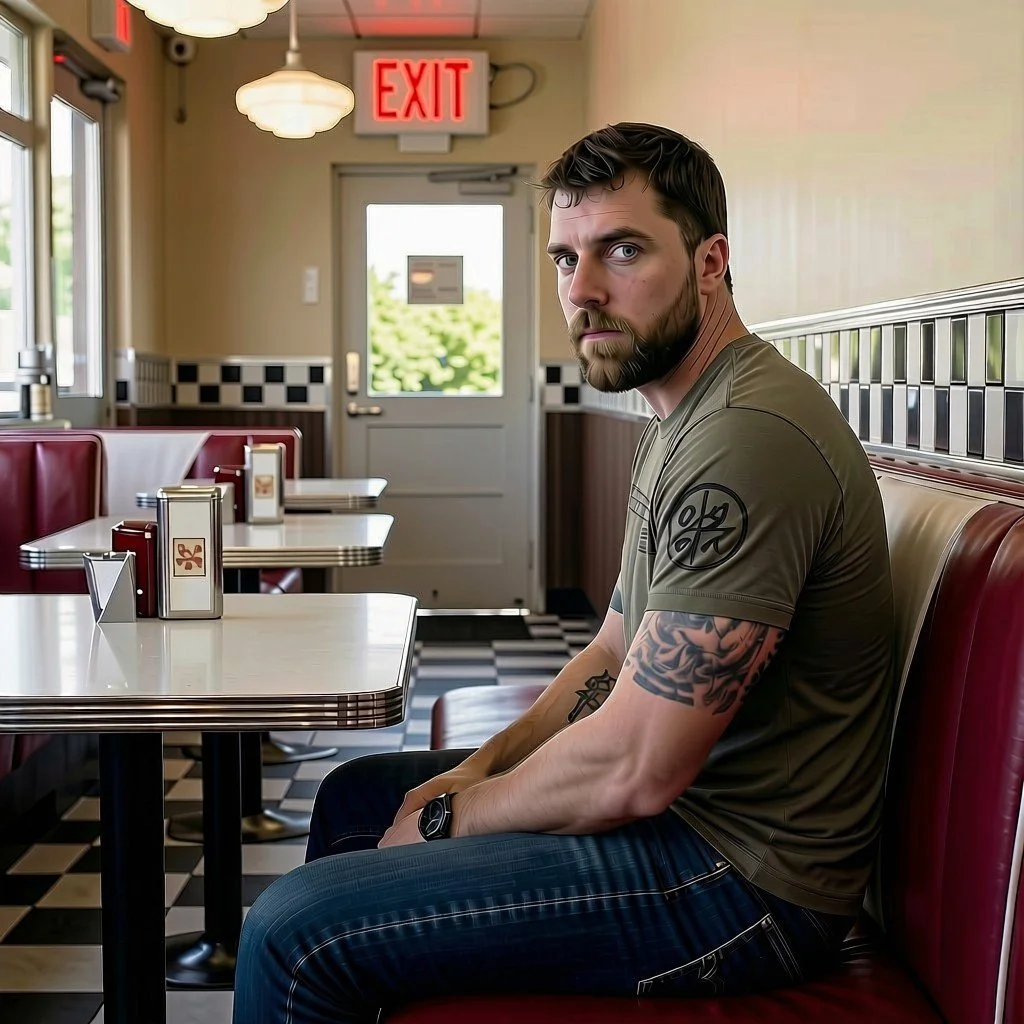
He’s sitting at a diner wearing jeans and a t-shirt, his back to the wall.
Every restaurant. Every waiting room… if you look closely — you’ll see him moving his chair, asking for another table so the door is always in view.
He learned to do this either by training or by tragedy in a place where it mattered. It worked at the time. His vigilance and discipline – mixed with good fortune got him home.
But the war, the IEDs, the surprise attacks ended years ago. And yet here he still sits, his back to the wall.
His wife doesn’t notice. It's just what he does. His kids think it's a little funny — Dad and his chair. Nobody in the house spends time thinking about the reasons why he scans for exits. It’s just an eccentricity. A habit of sorts.
He calls it being careful… more comfortable. But honestly, he’s never truly comfortable outside the confines of his home. Comfort is far from crowds. Even if it means shopping at Walmart at 3am. Anything to avoid too many people, too much movement, startling noise.
We should think about what his actions tell us. The watching for intruders, the chair by the wall, the planned escape. They tell a story of soldier who never realized it was safe to stand down. The war is over. The threat subsided. The uniform dusty. But that is too much logic for the part of him that MUST scan the room.
Here is the thing worth saying slowly: it made sense once. The habit came from a place of danger. It came from a place where noticing the exits kept him alive, where the wrong kind of trust got people killed. The uniform did its job.
This is a story about a man who does not believe he can take the day off from his worries.
He still eats with his back to the wall and calls it logic. He does not call it fear. He does not call it a wound. He calls it smart. And so the years move on, and the wall is a there. The door and the threat remain.
Somewhere in all of this is a question, and it is not “what’s wrong with him.”
The question is: What would it take for him to discover that he doesn’t have to organize his life around the threat of danger? That the war that ended when the plane landed is still running quietly in his shoulders, in the seat he chooses, in the way he never fully exhales in a crowded room.
Maybe he first has to notice that he is still following an order no one is giving. That it starts with his own permission.
Maybe it takes him hearing it more than once, because the first few times, he can’t believe it. Maybe it takes longer than anyone wants it to.
But somewhere, there is a chair. And maybe someday he sits in it without checking the door first.
________________________________________________________________________________________________________________