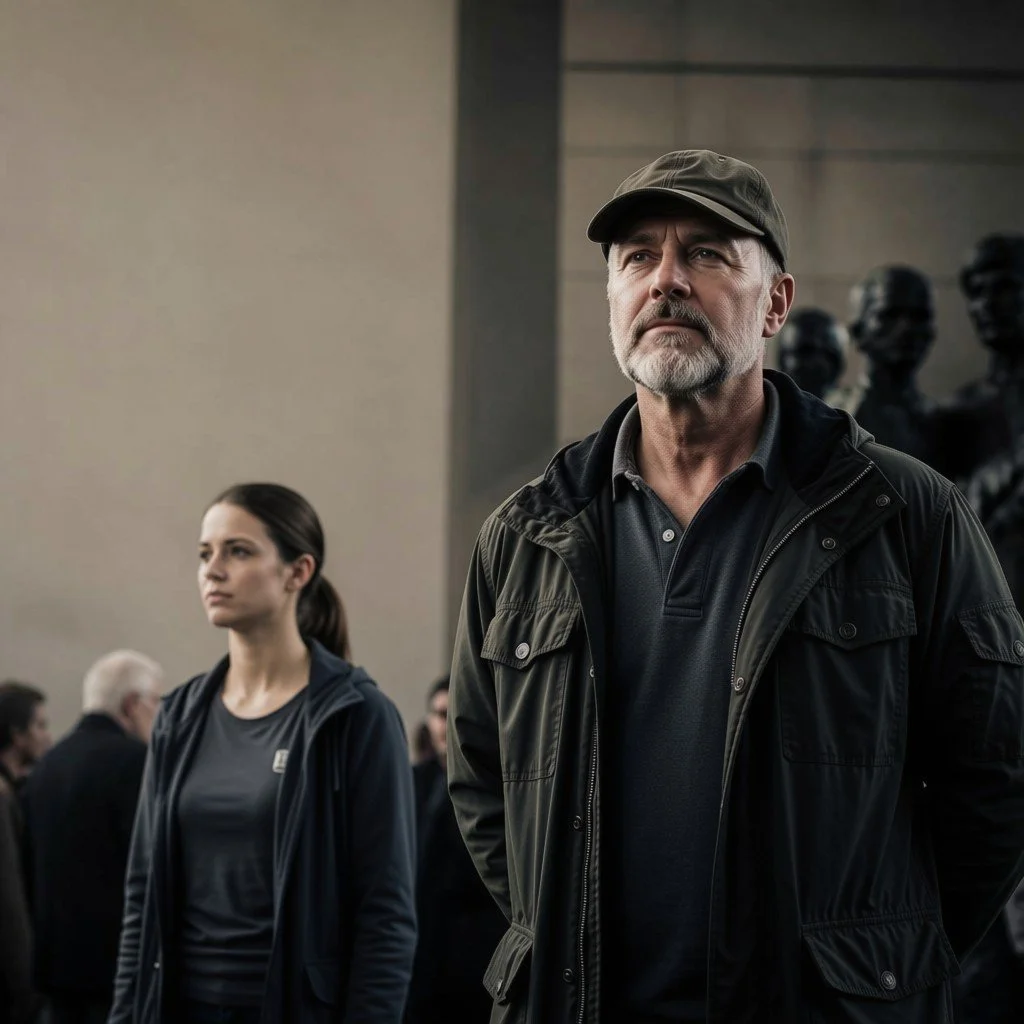
A man wearing a VFW hat walks by as she locks the door of her vehicle.
She has pulled into a space marked, Veterans Parking -Thank You for Your Service — earned, and hers to use.
“That,” he says, pointing to the sign above her car, “is for veterans only.” He walks past her with a grimace. He does not ask. He has already decided.
She is stealing the space.
She could explain. She could recite her years, her deployments, the medals, the things she carried that he knows nothing about.
Instead, she says nothing.
She checks the lock on her car and walks into the store, carrying one more burden she did not choose.
At the installation gate, her husband is driving. She hands him her ID to show the guard. She is the veteran.
She is the reason they are allowed through the gate.
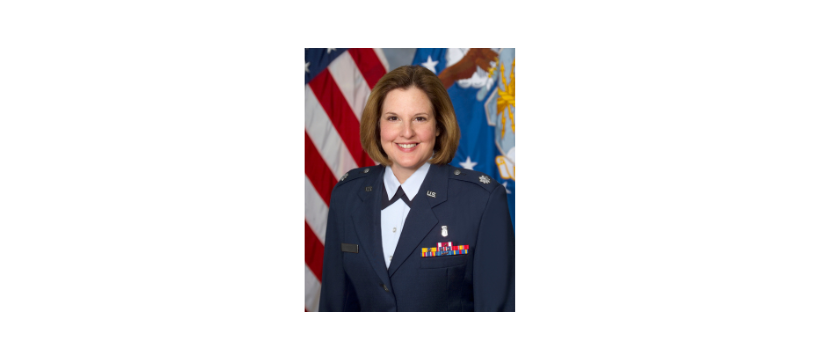
She is the retired officer.
The guard checks the ID and waves them through.
No salute.
On other visits to the base her husband is the one saluted -- out of habit or assumption.
She watches it happen and says nothing. There is a line behind them. No reason to hold everyone up.
When she wore the uniform, she would have corrected the guard.
Now for some reason, it just feels like hubris.
The guard has been trained to recognize military service. Yet even with her ID in his hand, he does not see her service.
At the PAX terminal, checking in for a military flight, the A1C asks for her husband’s ID. The Airman is a woman, but she assumes the veteran must be traveling under her husband’s ID.
The woman is not the veteran. Not the service member.
The woman is a plus-one, until proven otherwise.
This time the veteran corrects the A1C because it will affect their travel category.
Being invisible has real-world consequences.
This is not really a story about a parking space, a salute, or a mistaken ID.
This is a story about assumptions. “She” as the military wife. The sponsored daughter. A somebody standing beside a man who served instead of the person who gave just as much, sometimes more, as others who served.
And after enough years of this, something curious starts to happen.
If no one sees her as a veteran, it becomes easier for her to stop seeing herself as one.
Not all at once.
Just one small sliver of stolen identity at a time.
Every “thank you for your service” directed at her husband.
Every time she is considered the plus-one rather than searching for her name on the roster.
Every comment in a parking lot.
Every ID check that ignores her history.
She starts, without quite noticing the transformation, to agree with them.
And then she does something else.
She stops walking through doors meant for veterans.
She assumes, somewhere beneath conscious thought, that the benefits, the recognition, the Veterans Only parking space — all of it— was actually written for someone else.
Someone who looks like what a veteran is supposed to look like. Someone society keeps insisting is NOT her.
Researchers have recognized this phenomenon for years. [¹] Women veterans reporting feeling unseen or unrecognized for their service. Over time they are less likely to identify as veterans, compared to men. [²] It’s considered a form of disengagement.
But the experience is simpler than the terminology.
She stops claiming a truth about herself because so few people around her seem willing to hold it as real.
And eventually, being unseen begins to matter in ways that have nothing to do with parking spaces.
Women are the fastest-growing group of veterans in the United States and are expected to make up nearly one in five veterans within the next two decades. [³]
Yet many women veterans still don’t seek benefits or services they may have earned.
We sometimes treat this as a paperwork problem. But paperwork may be the last step in a process that began years earlier.
It is difficult to claim a veteran’s benefit when part of you has stopped claiming the title.
It is hard to walk through a door marked for veterans when experience has taught you, again and again, that people expect someone else to walk through it.
The man in the parking lot did not know any of this. He probably never meant to be cruel.
He believed he was protecting something — a parking space, a rule, a category he truth he thought he understood.
He simply could not see her.
And perhaps that is how invisibility works.
Not through one terrible act.
Just a series of assumptions and dismissals.
Until she begins dismissing herself without the prompting.
She gets back into her car and drives home.
And some small, tired part of her wonders, not for the first time, whether she imagined the whole thing.
Sources
[¹] Hendricks Thomas, K., & Hunter, K. (Eds.). Invisible Veterans: What Happens When Military Women Become Civilians Again (2019).
[²] Best, R. H., Hunter, K., & Hendricks Thomas, K. “Fighting for a Seat at the Table: Women’s Military Service and Political Representation.” Journal of Veterans Studies (2021).
[³] U.S. Department of Veterans Affairs data on women veteran population projections and women veterans’ use of VA benefits and services.